
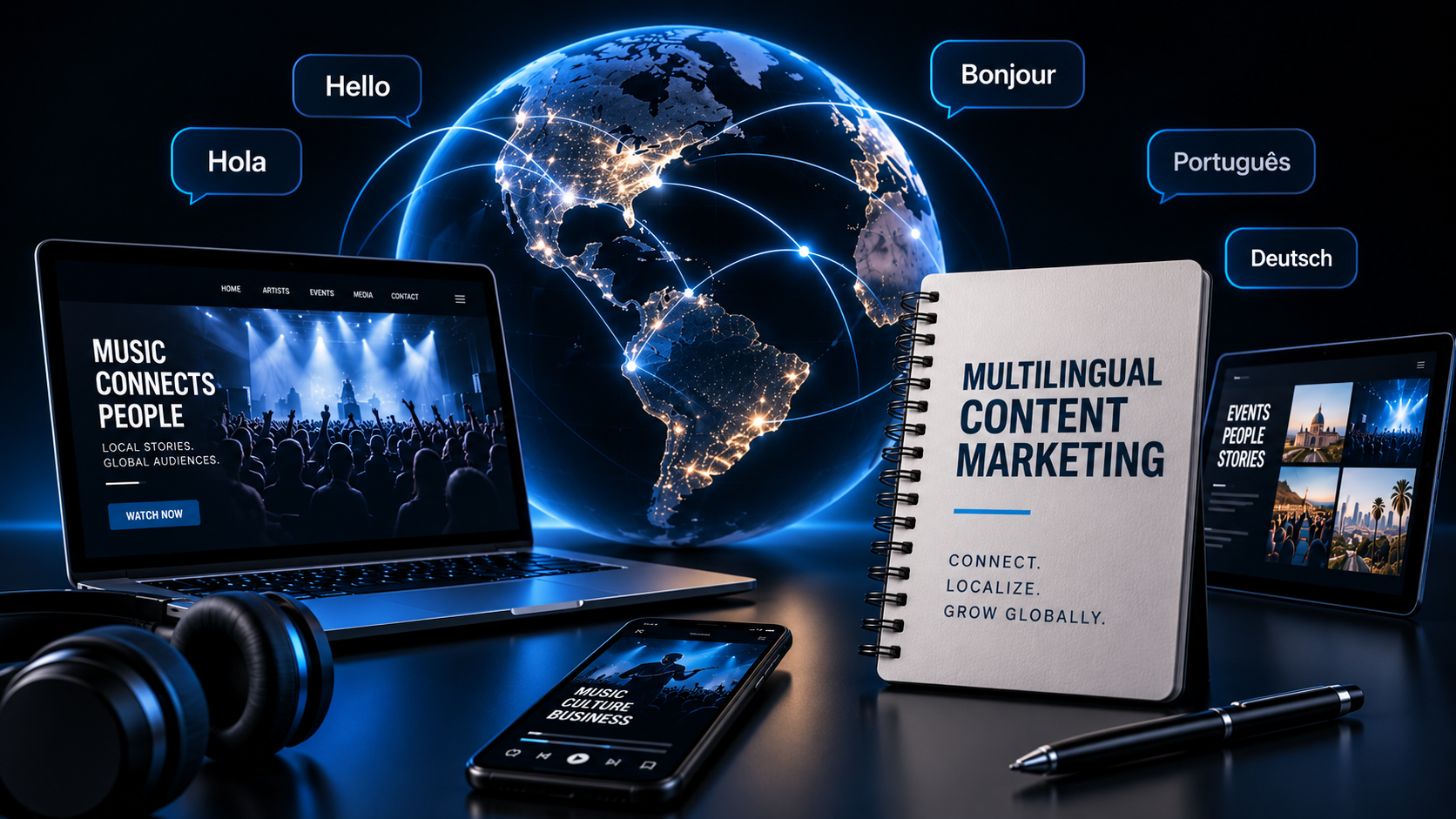
Multilingual content marketing helps brands grow by reaching people in the language they use to search, read, and buy. The fastest path is not to translate every page. Start with the best markets. Find real search demand. Localize high-value pages. Use multilingual SEO. Then track leads and sales by market.
Definition: Multilingual content marketing means making and improving content for people who use different languages. It goes beyond direct translation. It also looks at search habits, culture, buyer needs, and market fit.
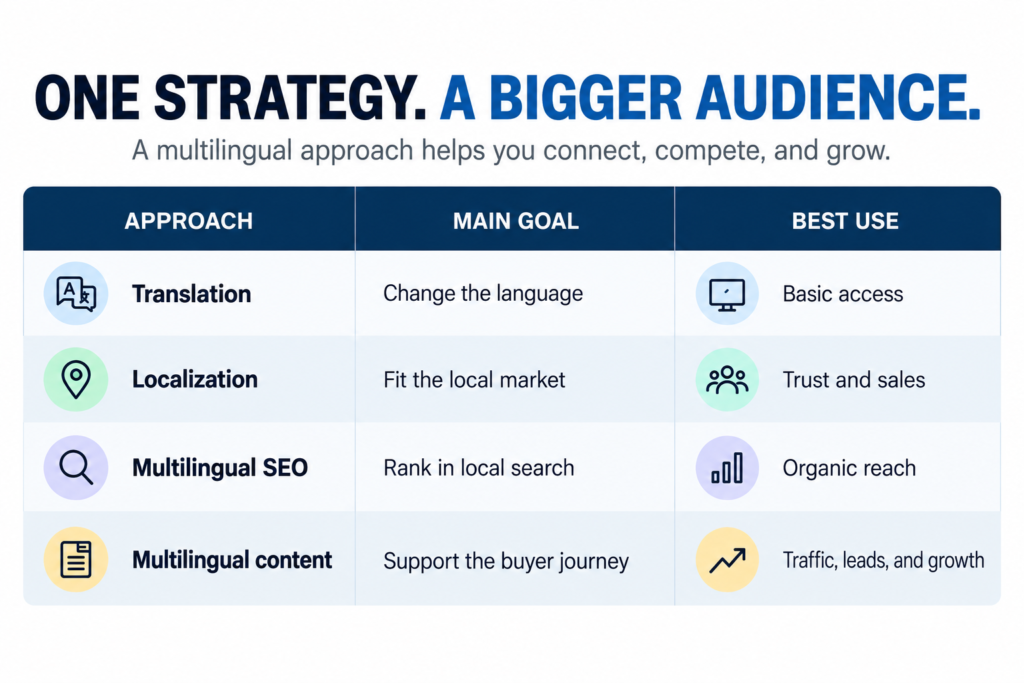
Translation makes content clear. Localization makes it fit the market. Multilingual SEO helps people find it. Multilingual content marketing links all three to growth.
Why Translation Alone Is Not Enough
A page can be well translated and still fail in search. People in each market may use different words. They may ask different questions. They may also care about different facts before they buy.
For that reason, do not just translate an English keyword. Research the terms that real people use in the target market. A direct translation may sound right but have little search demand.
The same rule applies to sales copy. A proof point that works in the United States may not work as well in Spain, Mexico, or Germany. Local examples, tone, prices, units, and calls to action may need to change.
BlueStage Expert Insight: A page should earn the right to be localized. First, check if the page drives traffic, leads, or sales. Then check if the same type of demand exists in the new market.
Choose the Right Market Before You Translate
Fast growth comes from better choices, not faster translation. In multilingual SEO, “fast” should mean less wasted work. It should not mean instant rankings.
| Factor | Question |
|---|---|
| Search demand | Are people looking for this offer? |
| Business fit | Can you serve this market well? |
| Competition | Can you earn search visibility? |
| Sales value | Can this traffic turn into buyers? |
| Cost | Can you localize the market at a fair cost? |
The biggest market is not always the best market. The best choice is the one with strong demand, good business fit, fair competition, sales value, and a cost you can support.
What Pages Should You Localize First?
Most brands should localize pages that are close to revenue first. Start with core service pages, product pages, category pages, pricing pages, comparison pages, FAQs, and strong organic landing pages.
- Core products and services
- Category pages
- Pricing pages
- Comparison pages
- Top organic pages
- FAQs
- Case studies
Do not translate old pages just because they exist. Skip weak blog posts, old news, and pages with no clear value. Focus on content that can help a user find, trust, and choose your brand.
How Multilingual SEO Helps People Find Your Content
Good content cannot drive growth if search engines cannot find or understand it. Multilingual SEO links each page to the right language, market, and search need.
This work may include local keyword research, page titles, links, URLs, sitemaps, index rules, and hreflang tags. Each page should match the words and intent used by people in that market.
Multilingual SEO targets people who search in different languages. International SEO targets people in different nations or regions. A site may need both.
For example, English pages for the United States and the United Kingdom may need regional SEO. English and Spanish pages also need language targeting.
How Localization Builds Trust
Search can bring a person to the page. Localization helps that person feel that the page was made for them.
People notice price, currency, units, tone, images, dates, reviews, and calls to action. They also notice when the page feels like a direct copy of a foreign site.
A local page should fit how people buy in that market. Some buyers may want more proof. Some may want more detail. Others may care more about cost, trust, speed, or support.
Search gets the click. Localization helps earn the sale.
Where AI Helps and Where Human Review Still Matters
AI is a production tool, not a market plan. It can make multilingual work much faster. Yet it still needs clear rules and review.
| AI Works Well For | Human Review Matters Most For |
|---|---|
| First drafts | Search intent |
| First-pass translation | Local culture |
| Term lists | Sales pages |
| Content sorting | Brand voice |
| QA support | High-risk claims |
AI can lower the cost of first drafts and routine work. Human review is still useful when a page can affect trust, legal risk, brand image, or a key sale.
Clear, useful local content may also help a brand appear in AI search tools. Strong facts, simple answers, useful tables, and clear topic links make a page easier for search and AI systems to understand.
Who Is Multilingual Content Marketing Best For?
It works best for brands that already have a strong offer and want to reach new buyers.
- U.S. brands that want to reach Spanish-speaking buyers
- Global firms that want to enter new markets
- SaaS firms that sell across borders
- E-commerce brands with demand in more than one language
- B2B firms that want leads from new regions
It can also help health, travel, school, and service brands when there is clear demand.
When Multilingual Content May Not Be Worth It
Multilingual content may not be worth scaling if demand is weak, your team cannot serve the market, or your main site has major SEO issues.
Do not enter a market just because it has a large population. Search demand must fit your offer. Your sales and support teams must also be able to serve the new buyers.
If those pieces are missing, test the market first. A small test can save a large amount of time and cost.
Translation Company vs. Multilingual SEO Partner
A translation firm may be the best choice when the main need is language accuracy. A multilingual SEO partner is more useful when the goal is search traffic, leads, and sales.
A strong SEO partner should help with market research, local keywords, page plans, technical SEO, content, tracking, and growth goals.
One good question to ask is: “What would make you tell us not to enter a market?” A strong partner should be willing to say no when the data does not support the move.
How Much Does Multilingual Content Marketing Cost?
Cost depends on the number of markets, pages, languages, and technical needs. It also depends on how much human review is needed.
Budget by market value, not word count. A cheap translation is not a good deal if no one finds the page. A costly page is also not a good deal if it cannot drive enough business value.
The key question is simple: Can the market create enough leads or sales to support the cost?
How to Measure Multilingual ROI
Track each market on its own. Do not hide weak markets inside one global traffic total.
Early signs include indexed pages, search views, rankings, clicks, and visits. Business results include leads, sales, deals, revenue, and conversion rate.
Rankings show if search reach is growing. Revenue shows if the market is worth the cost.
Is Multilingual Content Marketing Worth It?
It is often worth it when three things are true: people are searching, your firm can serve them, and the value of each buyer can support the cost of SEO and localization.
Strong signs include current foreign traffic, sales calls in another language, new-market demand, and rivals that already rank in that market.
If several of those signs are missing, do more research before you scale.
How Blue Stage Marketing Helps Brands Grow Beyond English
Blue Stage Marketing helps brands turn multilingual search demand into qualified organic growth. The process starts with market value, not mass translation.
Blue Stage can help with market research, local keyword research, buyer intent, content plans, localization, technical international SEO, AI-led workflows, human review, analytics, and conversion goals.
For U.S. brands, English-to-Spanish growth can be a strong first step when demand is clear. Global firms can use the same plan one market at a time.
Find the best multilingual search markets before you spend on large-scale translation.
Multilingual Growth Starts With Demand
Do not start by asking how much of your site you can translate. Start by asking where real customer demand exists.
The process is simple: Research → Prioritize → Localize → Optimize → Measure → Scale.
The goal is not to build the site with the most languages. The goal is to find the right demand and build a clear path from search to customer.
Frequently Asked Questions
What is multilingual content marketing?
It is the process of making and improving content for people who use different languages. It also adapts the content to local search habits, culture, needs, and buying intent.
Does translating a website improve SEO?
Not by itself. The page also needs local keyword research, useful content, strong technical SEO, and the right search intent.
What is the difference between multilingual SEO and international SEO?
Multilingual SEO targets different languages. International SEO targets different nations or regions. A global site may need both.
Which website pages should be translated first?
Start with pages close to revenue. These may include product pages, service pages, category pages, pricing pages, comparison pages, FAQs, and top organic pages.
Can AI create multilingual SEO content?
Yes, AI can help with drafts, translation, research, and QA. Human review is still useful for search intent, local culture, sales copy, brand voice, and high-risk claims.