

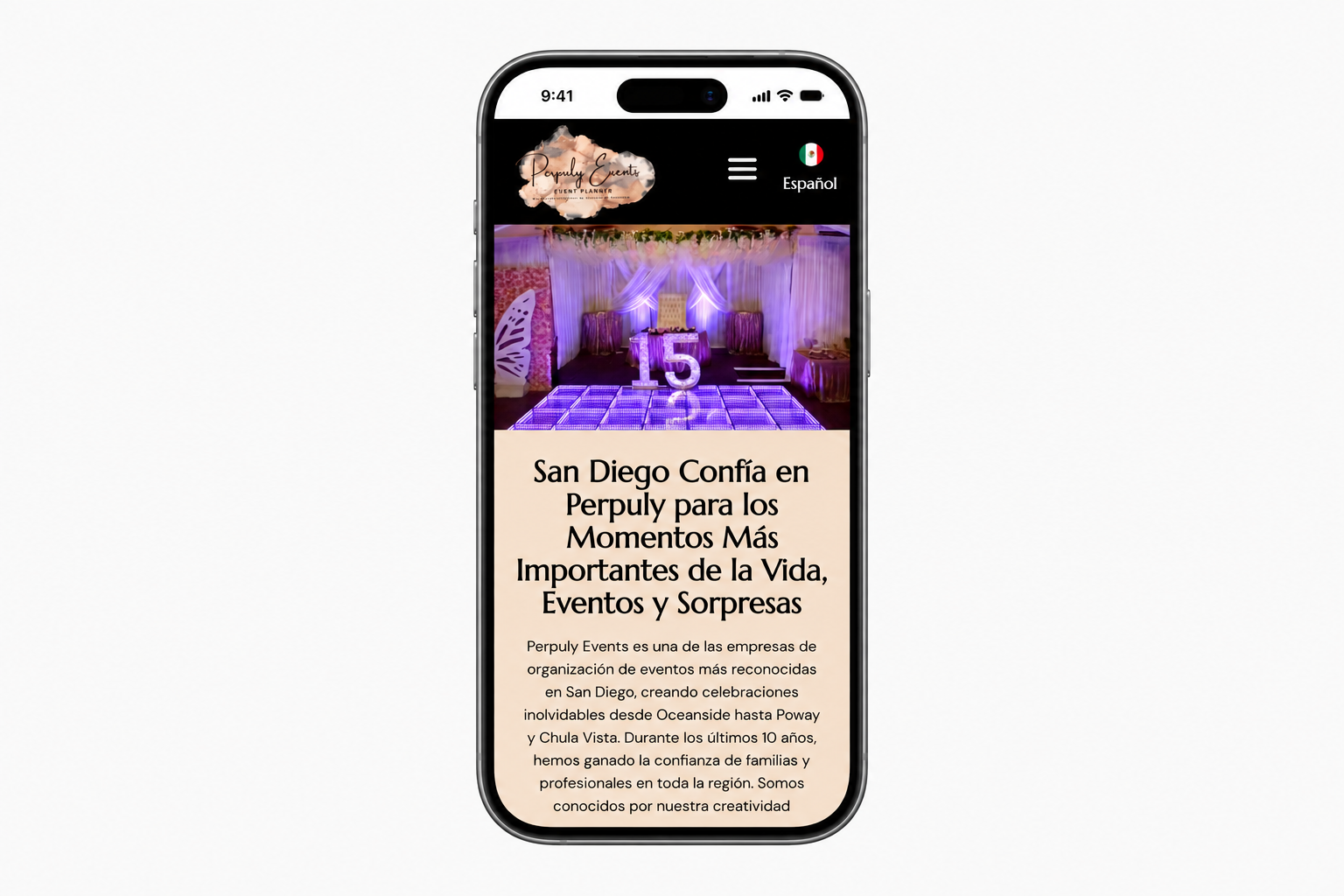
Multilingual content marketing is a strategy for creating and improving content for people who use different languages. It goes beyond translation. It also adapts keywords, search intent, culture, tone, and calls to action. The goal is simple: help the right people find, trust, and act on your content.
| Approach | Main Purpose | Search Research | Cultural Adaptation | Growth Focus |
|---|---|---|---|---|
| Translation | Change the language | No | Limited | No |
| Localization | Adapt content to a market | Sometimes | Yes | Partial |
| Multilingual SEO | Gain search visibility | Yes | Yes | Yes |
| Multilingual content marketing | Attract and convert people | Yes | Yes | Yes |
Multilingual Content Marketing vs. Translation
Translation changes words from one language to another. Localization adapts content for a market. Multilingual SEO helps people find that content in search. Multilingual content marketing brings these parts together so content can support traffic, leads, and sales.
A good translation can still be a marketing failure. People in another market may use different search terms. They may ask different questions. They may also trust different types of proof. Therefore, the message must fit the market as well as the language.
Why Translation Alone Can Fail
Direct translation does not always match the way real people search. A keyword can be correct in a dictionary but wrong for SEO. In addition, search intent may change from one country or language to another.
For example, a popular English topic may have very little Spanish search demand. Meanwhile, another topic may have strong Spanish demand but little English traffic. As a result, simply translating your best English pages may waste time and money.
Why this matters: keyword research should happen in each target market. Do not just translate an English keyword list.
How Multilingual Content Marketing Works
A multilingual content marketing plan often follows seven simple steps:
- Pick possible markets.
- Check search demand.
- Study local buyer intent.
- Choose the best content opportunities.
- Translate, localize, transcreate, or create new content.
- Optimize and publish the content.
- Track traffic, leads, sales, and revenue.
This process keeps the focus on business value. It also helps teams avoid spending money on pages that few people need or search for.
Which Language or Market Should You Target First?
Do not choose a language only because many people speak it. Instead, choose a market where real demand and business value meet.
Look at five main factors:
- Demand: Are people searching for what you sell?
- Value: Can those searches lead to useful sales or leads?
- Competition: How hard will it be to gain visibility?
- Cost: What will content and support require?
- Readiness: Can your business serve the market well?
A smaller market may be a better choice than a large one if buyers are ready to act and competition is lower.
Should You Translate, Localize, or Create New Content?
Translate when the meaning should stay almost the same. Localize when words, examples, proof, or calls to action must fit the market. Create new content when local buyers have needs or searches that do not match your current content.
| Content Type | Best Approach |
|---|---|
| Product specifications | Translate |
| Service pages | Localize |
| Buying guides | Localize or create new |
| Local trends | Create new |
| Market FAQs | Create new |
| Brand campaigns | Localize or transcreate |
The best choice depends on search intent. Therefore, businesses should not copy the same content plan into every language.
How Multilingual SEO Fits Into the Strategy
Multilingual SEO helps people find your content. Multilingual content marketing decides what they find, why it matters, and how it can move them toward a decision.
Good multilingual SEO may include local keyword research, search intent, clear URLs, hreflang, page titles, internal links, and correct indexing.
Again, local keyword research is key. Two words may mean almost the same thing, yet only one may be common in search.
Already have translated pages that are not ranking? A multilingual SEO audit can help find problems with search demand, keywords, localization, or technical setup.
How AI Is Changing Multilingual Content Marketing
AI can make multilingual content work faster. It can help with first drafts, first-pass translation, summaries, research, and content reuse.
However, people still play an important role. Human review can catch problems with culture, facts, brand voice, sensitive topics, and sales copy.
A simple rule works well:
AI for scale. Humans for judgment. Data for strategy.
| AI Can Help With | People Should Check |
|---|---|
| First-pass translation | Cultural meaning |
| Drafts | Brand voice |
| Summaries | Facts |
| Content reuse | Sales messages |
| Workflow speed | Final quality |
Real-World Multilingual Content Marketing Examples
| Business | Opportunity | Example |
|---|---|---|
| U.S. consumer brand | Reach Spanish-speaking buyers | Spanish service pages and guides |
| SaaS company | Enter a new country | Local solution and comparison pages |
| Online store | Capture product searches | Local category pages and buying guides |
| B2B company | Generate global leads | Service pages, case studies, and guides |
In each case, the goal is not to create more pages. Instead, the goal is to create the right pages for real demand.
What Does Multilingual Content Marketing Cost?
Cost depends on the number of languages, markets, pages, research needs, human review, technical work, and publishing pace.
Price per word can help measure translation cost. However, it does not show the full cost or value of a multilingual growth plan.
To measure return, track each language and market on its own. Useful measures include organic traffic, rankings, leads, conversion rates, sales, and revenue.
For example, imagine a program costs $20,000 and creates $70,000 in gross profit. In this simple example, the ROI would be 250%. This example is only for illustration and is not a BlueStage client result.
When Multilingual Content Marketing Does Not Work
Multilingual content can fail when a business:
- Translates content without checking demand.
- Uses direct keyword translations.
- Publishes raw AI output without review.
- Cannot serve the target market.
- Localizes content but not the buying path.
- Launches more languages than it can maintain.
- Tracks page count instead of business results.
In some cases, research should come before content production. This can prevent a large investment in a market that is not ready.
Is Multilingual Content Marketing Worth It?
Multilingual content marketing can be worth the cost when real demand exists, the business case makes sense, and your company can serve the audience well.
Four points matter most:
- Demand: People are looking for what you sell.
- Economics: The market can create enough value.
- Readiness: You can serve the audience.
- Execution: Your content can compete and convert.
If these points are strong, the market may be a good fit. If demand is unclear, research first. If the business cannot support the market, expansion may be too early.
How to Choose a Multilingual Content Marketing Partner
Ask these five questions before you hire a partner:
- Do they research keywords in each market?
- Who checks language and cultural accuracy?
- How do they use and review AI?
- Can they handle technical multilingual SEO?
- How do they connect results to leads or revenue?
If the whole process is just translating English pages, you are buying translation, not a multilingual growth plan.
An in-house team can work well when you already have language, SEO, content, technical, and data skills. An agency can help when key skills are missing. For many brands, a mix of internal knowledge and outside expertise works well.
Turn Multilingual Search Demand Into Growth
Multilingual growth is not about adding the most languages to your website. It is about finding useful demand and serving that audience well.
BlueStage Marketing helps brands find multilingual search opportunities before they spend heavily on translation or localization. The goal is to build a clear plan around real search behavior, useful content, strong SEO, and measurable growth.
Ready to grow beyond English? Explore BlueStage Marketing’s Multilingual SEO Services or request a consultation.
Frequently Asked Questions
What is multilingual content marketing?
Multilingual content marketing means creating and improving content for people who use different languages. It includes translation, localization, SEO, cultural context, and content planning. The goal is to help each audience find useful content and take the next step.
What is the difference between multilingual content marketing and translation?
Translation changes words from one language to another. Multilingual content marketing goes further. It can change keywords, examples, tone, calls to action, and content topics so they better fit the needs of a target market.
Does multilingual content help SEO?
It can. Strong results depend on real search demand, good local keyword research, useful content, and correct technical setup. Simply translating an English page does not mean the new page will rank in search.
Can AI be used for multilingual content marketing?
Yes. AI can help with translation, drafts, summaries, research, and content reuse. However, human review is still useful for culture, facts, tone, brand voice, sensitive topics, and sales messages.
How do you measure multilingual content marketing ROI?
Track each language and market on its own. Measure organic traffic, rankings, leads, conversion rates, sales, revenue, and total program cost. The main goal is to learn whether the content creates enough business value to support the investment.