
Most healthcare websites fail to convert patients because they lack trust-building elements, poor user experience, weak SEO structure, slow performance, and unclear patient journeys. Even professionally designed medical websites underperform when they are not optimized for patient trust, mobile usability, search visibility, and conversion-focused communication.
Why Patient Conversion Matters in Healthcare Marketing
Website traffic alone does not grow a medical practice.
A healthcare website becomes valuable when visitors take action.
This includes:
- booking appointments,
- requesting consultations,
- contacting the office,
- completing intake forms,
- calling the practice.
However, many healthcare websites focus heavily on design while ignoring patient conversion systems.
Today, patients evaluate providers quickly online. Therefore, websites that fail to establish trust and clarity often lose potential patients within seconds.
At Bluestage Marketing, healthcare website strategy focuses on patient experience, search visibility, and long-term conversion performance rather than appearance alone.
Most Healthcare Websites Prioritize Information Instead of User Experience
Many healthcare websites are overloaded with information.
While educational content is important, excessive complexity often creates friction.
Patients typically want quick answers to important questions such as:
- What services are offered?
- Does the provider specialize in their condition?
- How do they schedule an appointment?
- Is the practice trustworthy?
- Is the office nearby?
However, many medical websites bury these answers behind cluttered navigation and outdated layouts.
As a result, users leave before taking action.
Clear user experience improves:
- patient trust,
- appointment requests,
- engagement,
- conversion rates.
Poor Messaging Creates Uncertainty
Healthcare marketing depends heavily on trust.
Patients want confidence before making decisions.
However, many websites rely on vague language that fails to communicate actual patient value.
For example, generic messaging such as:
- “Committed to Excellence”
- “Quality Patient Care”
- “Leading Healthcare Solutions”
rarely differentiates a practice.
Meanwhile, patients respond more strongly to:
- specialization clarity,
- patient-focused communication,
- treatment transparency,
- accessible language,
- clear next steps.
Therefore, healthcare websites must communicate value immediately and clearly.
Weak Mobile Experience Reduces Patient Conversions
Most healthcare searches now happen on mobile devices.
Therefore, mobile optimization directly affects patient acquisition.
Common mobile issues include:
- difficult navigation,
- slow loading times,
- oversized forms,
- poor readability,
- broken layouts.
Patients expect fast and simple experiences.
If booking an appointment feels difficult, users often move to another provider.
Additionally, mobile usability impacts search rankings.
Search engines increasingly prioritize mobile-friendly websites in local search results.
Common Reasons Healthcare Websites Fail to Convert Patients
| Website Problem | Patient Impact | Business Result |
| Poor Messaging | Patients feel uncertain | Lower appointment requests |
| Weak Mobile UX | Difficult navigation | Lost conversions |
| Slow Website Speed | Frustration and abandonment | Higher bounce rates |
| Weak SEO Structure | Low local visibility | Reduced patient traffic |
| No Trust Signals | Lower credibility | Reduced patient confidence |
| Complex Scheduling | Increased friction | Fewer inquiries |
| Outdated Design | Reduced professionalism | Lower engagement |
Trust Signals Matter More in Healthcare
Healthcare decisions involve higher emotional and financial trust than many industries.
Therefore, credibility plays a major role in patient conversion.
Strong healthcare websites include:
- patient reviews,
- physician credentials,
- certifications,
- testimonials,
- treatment explanations,
- secure website infrastructure.
Additionally, professional UX/UI design improves perceived authority.
Patients often judge practice quality based on digital experience before ever visiting the office.
As competition increases, trust-building becomes even more important.
Poor SEO Structure Reduces Patient Visibility
Even strong healthcare websites fail when patients cannot find them.
Many medical practices invest in design while neglecting SEO fundamentals.
As a result, websites generate limited organic visibility.
Common healthcare SEO problems include:
- poor keyword targeting,
- weak local SEO,
- missing metadata,
- duplicate pages,
- poor internal linking,
- unoptimized service pages.
Additionally, many practices fail to optimize for local search intent.
Therefore, they lose visibility to competitors with stronger local SEO strategies.
Why Local SEO Is Critical for Healthcare Practices
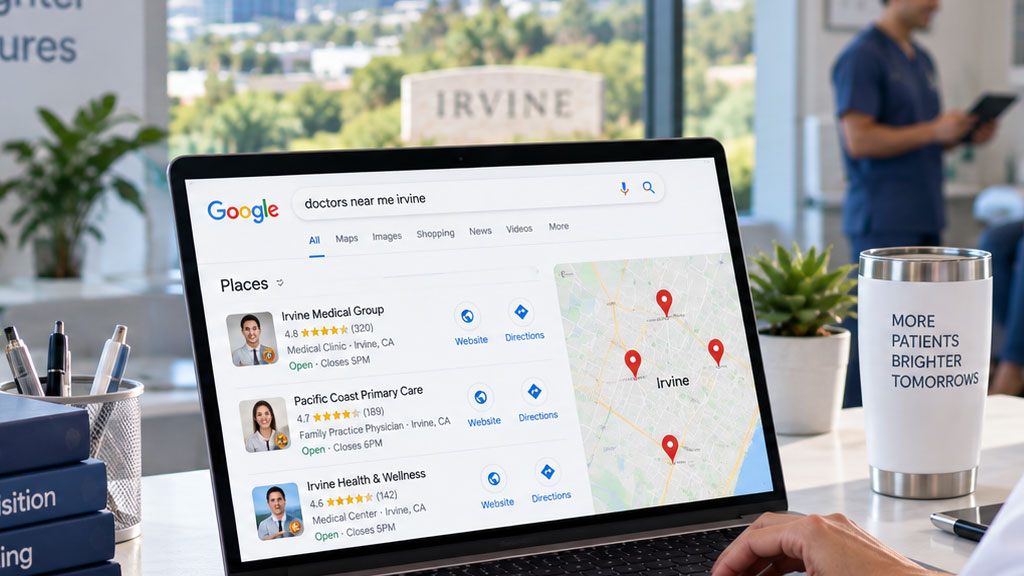
Healthcare search behavior is highly localized.
Most patients search for providers near their location.
Therefore, local SEO directly impacts patient acquisition.
Strong healthcare SEO improves:
- Google Map visibility,
- local rankings,
- appointment inquiries,
- service-area reach,
- long-term patient traffic.
Additionally, multilingual SEO helps practices connect with diverse local communities.
As patient demographics continue evolving, multilingual healthcare visibility becomes increasingly important.
Complicated Scheduling Systems Reduce Conversions
Patients expect convenience.
However, many healthcare websites create unnecessary scheduling friction.
Common issues include:
- difficult intake forms,
- unclear appointment processes,
- missing contact information,
- outdated booking systems.
Every additional step increases abandonment risk.
High-converting healthcare websites simplify the patient journey.
This includes:
- visible contact information,
- streamlined booking,
- mobile-friendly forms,
- clear calls-to-action.
Consequently, practices improve patient conversion consistency.
Website Speed Directly Impacts Patient Engagement
Slow websites reduce both SEO performance and patient trust.
Users expect websites to load quickly. Therefore, delays create frustration and increase bounce rates.
Common performance issues include:
- oversized images,
- outdated hosting,
- excessive scripts,
- poor website maintenance.
Faster websites improve:
- user experience,
- local rankings,
- patient engagement,
- conversion rates.
Additionally, performance optimization supports long-term SEO growth.
How High-Converting Healthcare Websites Actually Work
High-performing healthcare websites follow a strategic framework.
First, they establish trust immediately.
Next, they simplify navigation and reduce friction.
Additionally, they prioritize:
- mobile usability,
- local SEO,
- patient-focused messaging,
- fast performance,
- conversion-focused UX.
Most importantly, they align with actual patient behavior.
Websites that convert successfully are designed around trust, clarity, and accessibility.
The Role of UX/UI in Healthcare Marketing
Healthcare UX/UI design directly affects patient perception.
Strong UX improves:
- navigation,
- accessibility,
- usability,
- patient flow.
Meanwhile, strong UI design improves professionalism and credibility.
However, design should support patient conversion rather than distract from it.
The best healthcare websites balance:
- trust,
- simplicity,
- accessibility,
- speed,
- operational clarity.
Why Website Maintenance Matters for Healthcare Practices
Many healthcare websites become outdated quickly.
Over time, broken functionality, outdated plugins, and poor performance reduce both visibility and patient trust.
Regular website maintenance supports:
- SEO health,
- security,
- HIPAA-conscious infrastructure,
- mobile performance,
- conversion stability.
Therefore, website maintenance directly affects long-term patient acquisition.
The Future of Healthcare Website Conversion
Healthcare marketing continues evolving rapidly.
Patients increasingly expect:
- mobile-first experiences,
- fast communication,
- transparent information,
- localized search relevance,
- digital convenience.
Meanwhile, AI-driven search and local SEO continue reshaping healthcare visibility.
Practices that invest in conversion-focused digital infrastructure will maintain stronger patient acquisition advantages moving forward.
Websites that fail to evolve may struggle with declining visibility and reduced engagement over time.